

Court operations during communicable disease phase of COVID-19
The default method of attendance for participants is in person. See the Provincial Court’s NP 28 for more information.
If you identify as Aboriginal or Indigenous and you plead guilty to a crime or are found guilty, you might be able to have your bail or sentencing hearing in a First Nations/Indigenous Court in BC. You might be brought into a First Nations/Indigenous Court by referral from a judge, defence lawyer, or Crown lawyer. Or you can request to go to First Nations/Indigenous Court. It’s your choice to have your matter heard in First Nations/Indigenous Court. Talk to your lawyer or First Nations/Indigenous Court duty counsel about what’s best for you.
First Nations/Indigenous Courts are criminal sentencing courts that use restorative justice and traditional ways to reach balance and healing. BC's First Nations/Indigenous Courts are often called Gladue courts.
First Nations/Indigenous Courts focus on balancing rehabilitation, accountability, and healing. The judge, your lawyer, Crown counsel, Elders and your community, and your family work with you to create a healing plan to help restore your mental, physical, spiritual, and emotional health.
You might still be sentenced to jail. If you're sentenced to jail, the judge must still consider your unique circumstances in their decision.
How to transfer your case to First Nations/Indigenous Court
You might be able to have your case transferred to a First Nations/Indigenous Court if:
- you identify as Aboriginal, and
- you plead guilty to a criminal offence.
You or your lawyer can call First Nations Court duty counsel to see if you can go to First Nations/Indigenous Court. They can tell you how to get your case transferred there. They can answer any questions you have about First Nations/Indigenous Court.
604-601-6074 (Greater Vancouver)
1-877-601-6066 (elsewhere in BC)
It’s your choice to have your matter heard in First Nations/Indigenous Court. Talk to your lawyer or First Nations Court duty counsel about what's best for you.
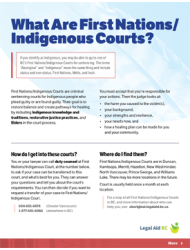
Explains restorative justice at First Nations/Indigenous Court
Who can help at court
It's a very good idea to get legal advice on or before your day in court. Duty counsel can give you free legal advice about:
- the charges against you
- court procedures
- your legal rights
Duty counsel can help you if:
- you can't get a legal aid lawyer
- you haven't yet applied for legal aid.
Duty counsel can also represent you at a bail hearing. If there's time, they can help you with a guilty plea. Don't plead guilty without getting legal advice first.
First Nations Court duty counsel can help you. They do everything duty counsel does and can also:
- tell you how to apply to have your case transferred to First Nations/Indigenous Court
- represent you at your bail hearing in First Nations/Indigenous Court
- go to your sentencing hearing in First Nations/Indigenous Court
A legal aid navigator can help you at First Nations Court in New Westminster. They can give you legal information and refer you to other services.
Outlines what happens when you're charged with a criminal offence
Indigenous community legal workers — Give legal information and limited advice services
Native Courtworkers and Counselling Association of BC — Culturally appropriate services to Aboriginal people involved in the criminal justice system
First Nations Court duty counsel — Give free legal advice about having your case transferred to First Nations Court and the charges against you